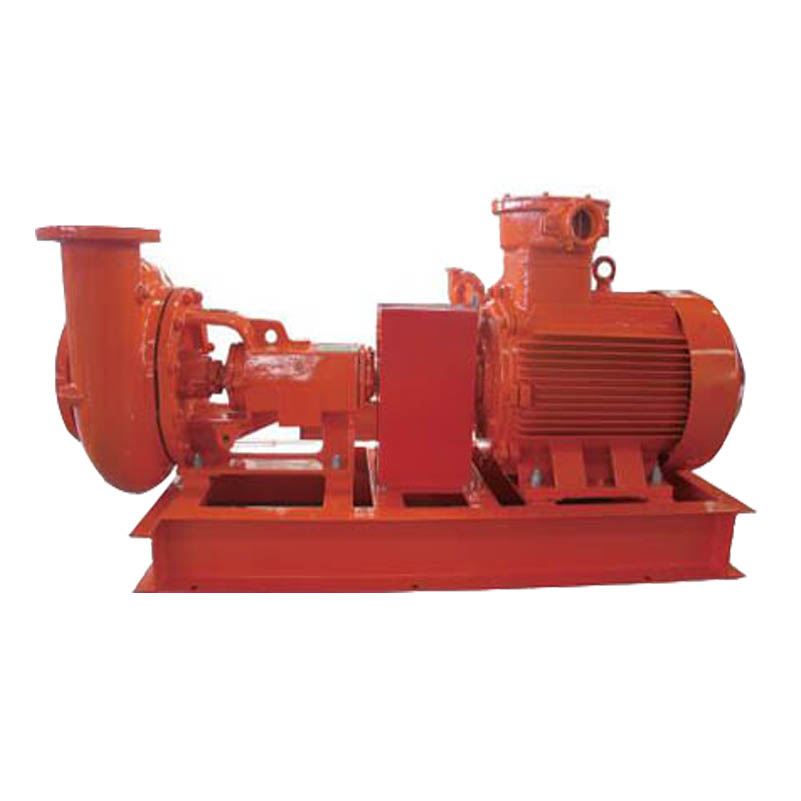
In drilling mud solids control, a "sand pump" is the specific type of centrifugal pump designed to handle the abrasive, solid-laden fluids of drilling mud. While all sand pumps are centrifugal pumps, not all centrifugal pumps are suitable for this harsh
Purpose-built for demanding drilling operations
This centrifugal pump serves as a critical component within solid control equipment systems, primarily designed for professional users managing drilling mud circulation on rigs. It is engineered to transport and feed mud drilling fluid containing abrasive solids, addressing the needs of drilling contractors and engineers focused on maximizing efficiency in solids control. By supporting functions such as feeding, transferring, and boosting fluid flow to secondary separation units, the pump integrates seamlessly into the solids control centrifuge and other modular drilling equipment on site. Its targeted application enhances operational continuity and fluid conditioning in drilling mud treatment workflows.
Advanced design tailored for abrasive fluid dynamics
Incorporating a series of wear-resistant alloys, including hard ductile iron, the pump optimizes durability against the erosive effects of solid-laden drilling mud. Its open vane impeller design promotes unhindered flow of particulate-rich mud drilling fluid, significantly reducing clogging risks. The concentric casing drives smooth fluid dynamics, lowering mechanical wear and turbulence. Performance metrics include a flow rate capacity ranging from 45 to 320 m³/h and mechanical power options between 11 and 75 KW, ensuring robust adaptability to various drilling mud pump demands. This combination of materials engineering and hydraulic optimization elevates system reliability and maintenance efficiency within drilling mud treatment processes.
Crucial role in drilling solids control integration
Deployed across oil and gas drilling, trenchless drilling, and wellbore fluid circulation, the pump fulfills essential roles such as feeding desanders, desilters, and booster functions for trip tanks. It enables consistent circulation of drilling fluids in solids control centrifuges and enhances the efficiency of mud separation and recycling. The pump’s compatibility with industry-standard parts supports rapid maintenance, reducing downtime in critical drilling equipment operations. Overall, it contributes to maintaining fluid properties and wellbore stability by enabling effective drilling mud treatment, which directly impacts drilling productivity and environmental compliance.
Product Advantages
Structural and design strengths promoting operational robustness
The centrifugal pump is engineered with a modular design that facilitates integration within existing solids control equipment setups. Its use of high-grade wear-resistant alloys provides prolonged resistance to abrasive erosion common in drilling mud environments. The open vane impeller and concentric casing converge to create a volumetrically efficient flow path that minimizes sediment settling and mechanical stress. The standardized parts and compatible interfaces allow interchangeability with common drilling mud pump brands, simplifying system upgrades and maintenance cycles. This design approach ensures adaptability and straightforward system integration in various drilling equipment configurations.
Superior operational performance and user-centric value
From a performance standpoint, the pump delivers stable fluid flow with low leakage rates due to its durable mechanical seal, frequently composed of tungsten carbide. Its operational reliability under heavy-duty conditions supports continuous mud drilling fluid circulation essential for solids control centrifuge efficiency. The pump’s versatility as a feed, transfer, or supercharging pump improves workflow flexibility and operational responsiveness for drilling teams. Ease of maintenance and robust construction reduce lifecycle costs, reinforcing return on investment by minimizing equipment downtime and enhancing mud treatment processes critical to drilling success.
In drilling mud solids control, a "sand pump" is the specific type of centrifugal pump designed to handle the abrasive, solid-laden fluids of drilling mud. While all sand pumps are centrifugal pumps, not all centrifugal pumps are suitable for this harsh application. A sand pump is built with heavy-duty, wear-resistant materials and robust components to circulate the drilling fluid, transfer it between tanks, and feed it to separation equipment like desanders and desilters.
Features of sand pumps for solids control
Abrasion resistance: Sand pumps are constructed from wear-resistant alloys, such as hard ductile iron alloy, to withstand the constant abrasion from solids in drilling mud.
Open vane impeller: A wide, open impeller design allows for the free flow of fluid containing solid particles. This reduces axial thrust loads and prevents clogging, which in turn extends the life of the bearings.
Concentric casing: This design promotes a smooth flow pattern, which minimizes turbulence and reduces abrasive wear on the pump's interior.
Durable mechanical seal: A high-quality mechanical seal, often made of materials like tungsten carbide, provides a near-zero leakage solution for reliable, long-term operation.
Interchangeable parts: Many sand pumps are designed to be interchangeable with industry-standard models, such as Mission pumps, making spare parts readily available.
Common applications in solids control
Sand pumps serve several crucial functions within a drilling rig's solids control system:
Feed pump: The pump supplies drilling mud to desanders, desilters, and mud cleaner hydrocyclones for the removal of fine solids.
Mixing pump: When combined with a jet mud mixer, the sand pump is used for mixing and adding drilling fluid additives.
Transfer pump: The pump moves drilling mud or other slurries between different tanks in the system.
Supercharging pump: It can serve as a booster or charge pump to feed the rig's main high-pressure mud pumps.
Trip pump: A smaller sand pump can be used with a trip tank to supplement drilling mud levels and maintain wellbore pressure when tripping pipe.
Parameters
Model
Flow rate
(m3/h)
Lift
(m)
Motor power
(KW)
Speed
(rpm)
Impeller diameter
(inch)
Weight
( kg)
Dimension
(mm)
AX-SB8x6-14
320
35
75
1450 (50HZ)
14
1230
1968x650x942
AX-SB8x6-12
1750 (60HZ)
12
AX-SB8x6-13
272
35
55
1450 (50HZ)
13
896
1894x650x932
AX-SB8x6-11
1750 (60HZ)
11
AX-SB6x5-13
200
35
45
1450 (50HZ)
13
786
1861x558x838
AX-SB6x5-10
1750 (60HZ)
10
AX-SB6x5-12
150
30
37
1450 (50HZ)
12
766
1831x558x838
AX-SB6x5-9.5
1750 (60HZ)
9.5
AX-SB5x4-13
120
35
30
1450 (50HZ)
13
642
1741x568x818
AX-SB5x4-11
1750 (60HZ)
11
AX-SB5x4-12
90
30
22
1450 (50HZ)
12
620
1667x568x729
AX-SB5x4-10
1750 (60HZ)
10
AX-SB4x3-13
65
35
18.5
1450 (50HZ)
13
530
1635x505x729
AX-SB4x3-12 I
1750 (60HZ)
12
AX-SB4x3-12 J
55
28
15
1450 (50HZ)
12
482
1615x505x709
AX-SB4x3-10
1750 (60HZ)
10
AX-SB4x3-11
45
25
11
1450 (50HZ)
11
464
1585x505x709
AX-SB4x3-9.5
1750 (60HZ)
9.5
Use Scenarios
Feeding solids control centrifuges in drilling mud recycling
In the context of oil and gas wells, this centrifugal pump plays a vital role feeding drilling mud into solids control centrifuges for effective separation of solids from the mud drilling fluid. Operating in harsh environments where abrasive materials can damage equipment, the pump’s wear-resistant construction allows it to continuously circulate mud between tanks and treatment units. This functionality ensures consistent mud quality and optimal centrifuge separation performance, integral to efficient drilling mud treatment systems. Integration with mud tanks and desilters facilitates smooth workflow operations while maintaining environmental and safety compliance standards.
Enhancing drilling fluid transfer in trip tank management
During pipe tripping operations, maintaining wellbore pressure is critical. This centrifugal pump functions as a booster pump to transfer abrasive drilling mud between trip tanks and high-pressure mud pumps. Its robust design accommodates the demanding flow and pressure conditions required to stabilize mud weight and prevent well control incidents. The pump’s mechanical reliability and compatibility with drilling equipment ensure uninterrupted circulation, thereby supporting real-time mud drilling fluid management in dynamic drilling scenarios. This application reinforces operational precision and contributes significantly to overall drilling safety and efficiency.
FAQ
What materials are used in your centrifugal pump to resist wear?
Our centrifugal pump is made from wear-resistant alloys such as hard ductile iron, specifically chosen to handle abrasive drilling mud and solid-laden fluids. This construction ensures durability and prolongs service life in demanding solid control equipment applications.
Can you customize the centrifugal pump specifications for specific drilling operations?
Yes, we can tailor pump models, flow rates, and power specifications to fit various operational needs in drilling mud treatment. Our engineering team works closely with you to deliver optimal performance within your drilling equipment system.
How do you support installation and maintenance of your drilling mud pumps?
We provide comprehensive technical guidance and offer interchangeable parts compatible with industry-standard pumps to ensure easy maintenance. Our support covers pump setup, troubleshooting, and spare parts replacement to maintain efficient drilling mud pump operation.
What logistics options are available for shipping your solids control centrifuge and related equipment?
We arrange secure transportation for all orders, ensuring timely delivery of solids control centrifuge units and accessories. Our logistics team coordinates packaging and export procedures to meet your project schedules and handling requirements.





 +86 1871 286 0976

 sales@jxsolidscontrol.com