

TBM Entrance & Exit Rubber Seal Guide
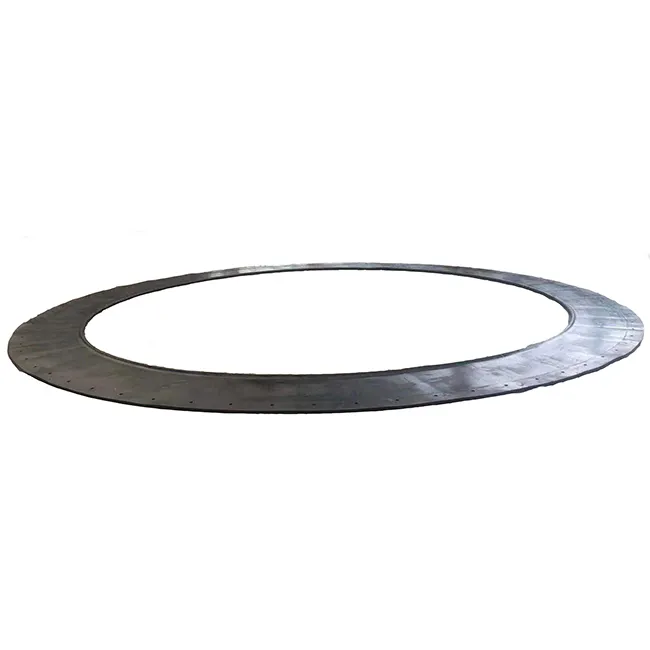
A tunnel drive begins and ends at a wall, and one rubber ring decides whether bentonite slurry and groundwater stay out of the pit. This hub converts your tunnel diameter and machine model into an orderable seal — inner ID, outer OD, PCD, thickness and a bolt circle pitched at one hole every 5°. Whether you are vetting a tunnel gasket manufacturer or briefing a tunnel gasket supplier, every figure on this page is taken from the live listing for Item No. 33.
Start With What You Are Sealing
Three arrival points, three different things to fix before anything is ordered. Pick the one that matches your works and the rest of this page follows that branch.
Entry Pit / Launch Wall
The ring is bolted to the jecting wall ahead of the drive. Its job is to stop slurry and water flowing back into the entrance pit while the tunnel boring machine starts through the face.
Fix first: inner ID clearance for the shield, and the PCD of the wall bolt circle.
Exit Pit / Breakthrough Wall
The same ring family at the receiving end, where the machine arrives and the pit has to stay dry. Here the face you bolt to is the deciding measurement, not the cutterhead.
Fix first: receiving-face bolt circle and how flat that face sits.
Tunnel Segment Joint
The listing also describes the part as a tunnel segment gasket, so a joint ring is quoted from the geometry you supply rather than from a stock size.
Fix first: the joint ring dimensions you are matching — ID, OD and PCD.
What This Part Is Called
Buyers arrive with different words for one object. This map ties each name to the same ring so the rest of the page reads correctly whichever term you searched.
| Name you will see | Why it is called that | Where it applies |
|---|---|---|
| Rubber seal | The plain description used on the product page for the tunnelling ring. | Entry and exit pits |
| Rubber flange | The page describes it as being “like flange” — a ring that bolts flat to a face. | Entry and exit pits |
| Black eye seal | The empty hole in the middle of the ring reads as a black eye, which is where the nickname comes from. | Entry and exit pits |
| Launch seal / launching seal | The ring is fitted before the machine starts boring, so it is named for the launch stage. | Entry pit |
| Tunnel segment gasket | The gasket form named in the product title, quoted from the joint ring you supply. | Segment ring joints |
| Entrance / exit rubber seal | The same ring described at both ends of a drive, which is the full product title. | Entry and exit pits |
The Four Numbers That Make a Seal Orderable
There is no stock size to look up. ID, OD and PCD are made to your tunnel requirement, and the hole pattern follows a fixed pitch, so the specification is built from what you measure.
-
Name the machine model
Outer diameter and inner diameter are made as the tunneling machine model requires, so the model number is the first line of the specification, not an afterthought.
-
Give the tunnel / shield diameter
Both inner ID and outer diameter are made as tunnel requirement, which is what lets the ring close the annulus at your actual bore.
-
Fix the PCD
Pitch circle diameter is customized to the bolt circle on the fixing face. Measure it on the wall or the face plate you will bolt to.
-
Check the hole pitch
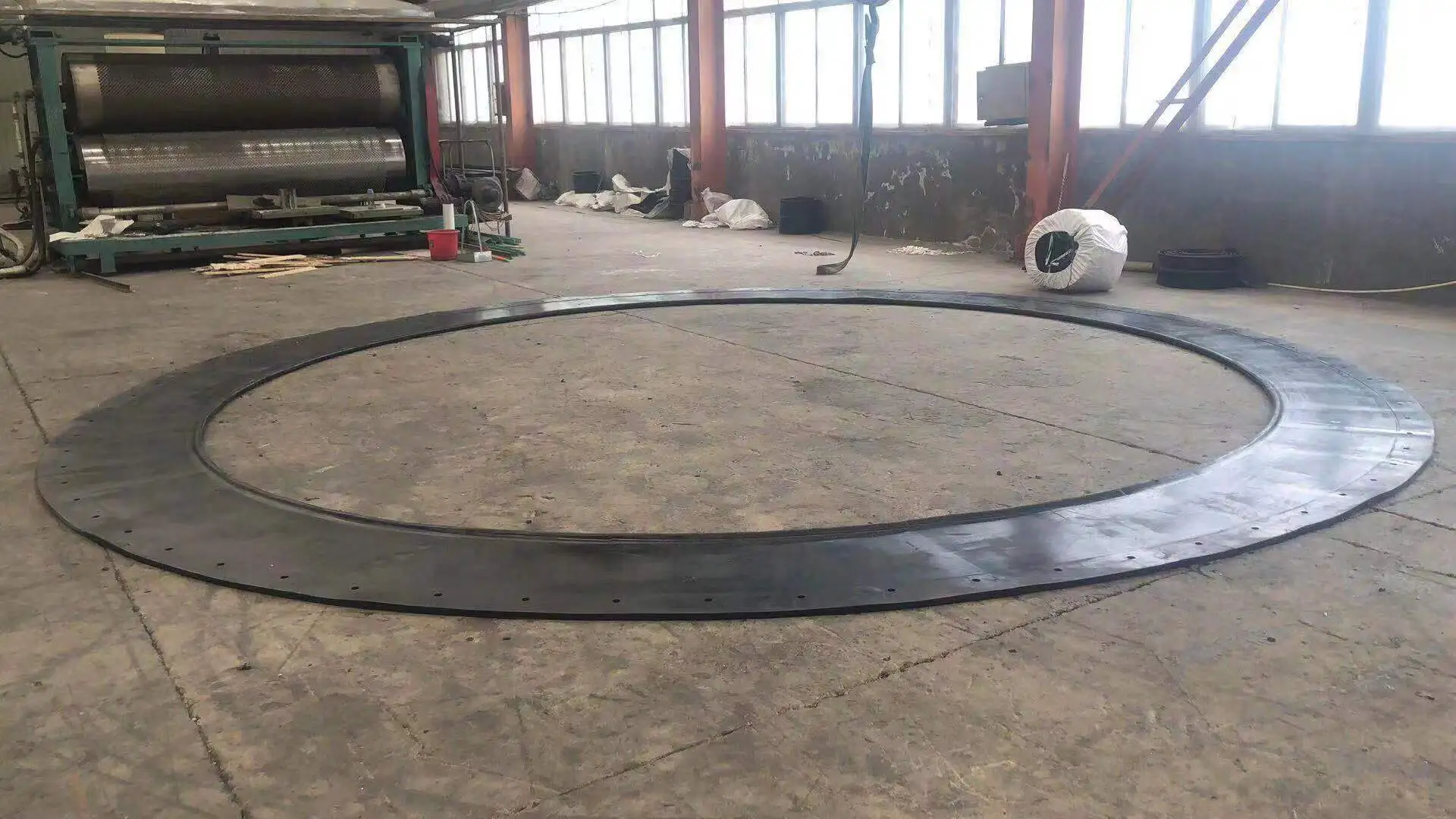
The pitch is fixed at one hole per 5 degrees, so the count follows the arc you need — a full 360° ring resolves to 72 hole positions at that pitch.
-
Choose a thickness
10 mm, 20 mm or 30 mm. Thickness is a fit decision rather than a strength score; the selector below sets out the trade-off.
-
Name the media
Slurry, water and backflow at the entrance pit are what the ring is there to hold out, so say which of them the seal will see.
| Dimension | How it is set | What to put in your inquiry |
|---|---|---|
| Inner diameter (ID) | Made as tunnel requirement | ID and the tunnel / shield diameter it must clear |
| Outer diameter (OD) | Made as tunneling machine model requirement | OD and the machine model |
| PCD | Customized to your fixing face | Measured pitch circle diameter |
| Thickness | 10 mm, 20 mm or 30 mm | Chosen build and the face gap you measured |
| Hole pattern | One hole per 5 degrees | Machine model and the fixing face you are bolting to |
Thickness and Reinforcement Selector
Three builds are offered. Each one is a different amount of rubber behind the lip, which is what changes how the ring seats against your face gap.
10 mmThinnest build
The product page notes that at 10 mm there is no water drop at the edge of the circle. Suits a tight face gap where you want the ring to seat with the least resistance.
20 mmMid build
More rubber behind the lip than the 10 mm ring, so it keeps its shape on a face that is not perfectly prepared while still closing on the gap.
30 mmHeaviest build
The stiffest of the three, for a wider gap or a fixing face that needs more material to deform against before it seats.
All three builds share the same construction: a natural rubber body with an inner support of nylon wire interwired with horizontal cotton wire. Confirm the final build against the measured face gap and the machine’s fixing face before the ring is cut.
Specification Spotlight: Item No. 33
Everything below is the current published build for the entrance and exit rubber seal. The two lines that most often decide a quote are the customized ID/OD/PCD and the fixed 5° hole pitch.
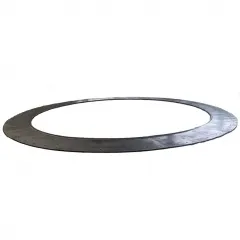
| Item No. | 33 |
|---|---|
| Material | Nature rubber |
| Inner support | Interwire with nylon wire and horizontal cotton wire |
| Thickness | Can be made 10 mm, 20 mm and 30 mm |
| Inner and outer diameter | Made as tunnel requirement |
| Size | Customized inner ID, outer OD and PCD |
| Hole pattern | Each 5 degrees carries one hole to fit the ring on the tunneling machine |
| Minimum order | 1 piece |
| Production rate | 2 pcs / day |
| Packaging | Each piece is a roll; plastic film wrapping first, then a plywood case suited to ocean delivery |
| Category | HDD and Shield Tunneling TBM |
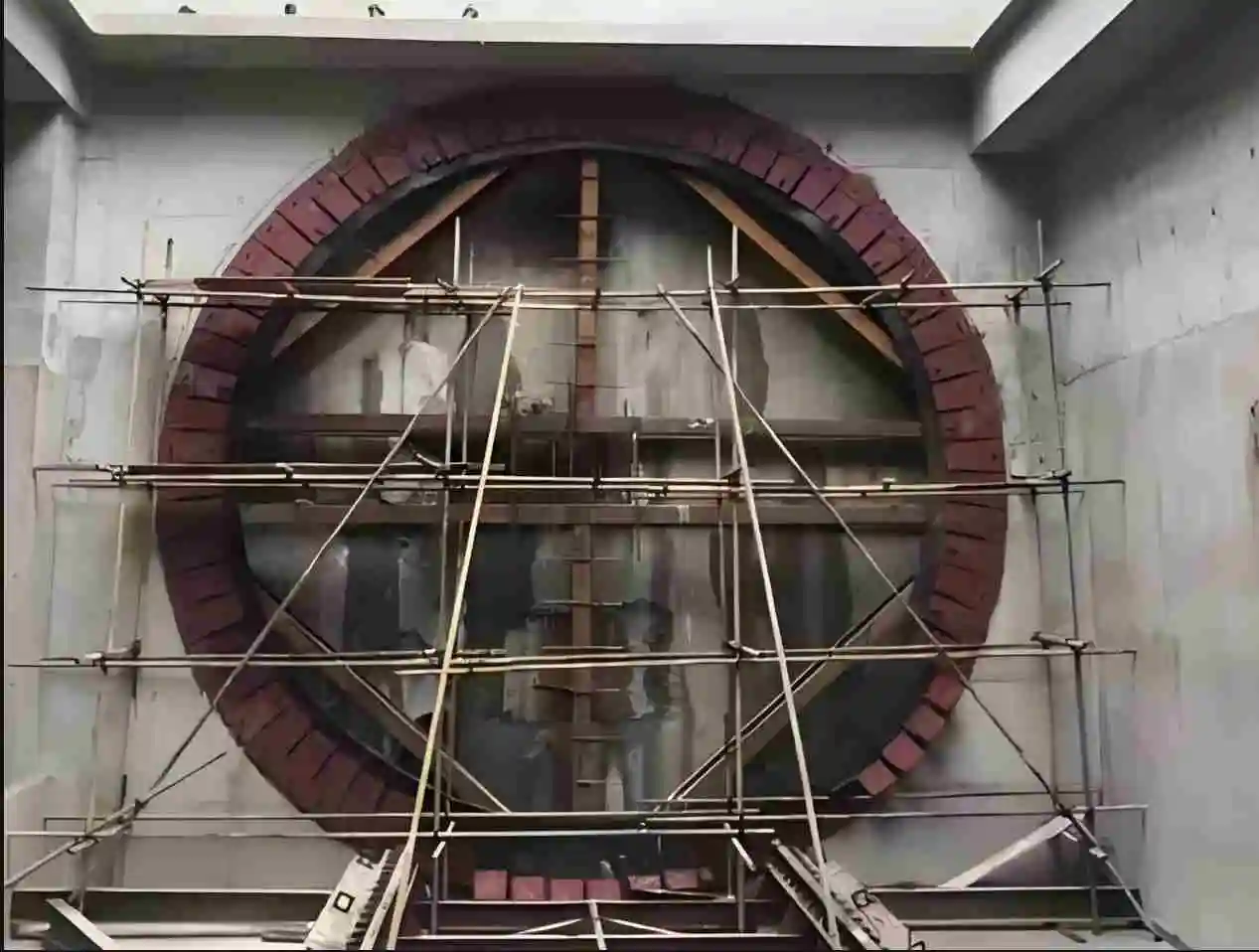
The ring is used on tunnelling projects with a tunnelling machine and is fixed on the jecting wall to keep slurry and water from flowing back into the entrance pit. That single duty is what the customization exists to serve — the ID has to clear your shield, and the PCD and 5° hole pitch have to land on your face.
Fixing the Seal on the Jecting Wall
The ring only does its job if it is bolted flat, on the right circle, with the bore clear. These are the checks that follow directly from the published specification.
-
Bolt the ring to the jecting wall
The seal is fixed on the wall ahead of the machine, so the fixing face, not the ring, sets the datum for the whole build.
-
Match the hole pitch
With one hole per 5 degrees, the ring only lines up one way once the PCD is correct — check the pattern against the face before lifting it into place.
-
Seat it flat and confirm the bore
Work around the ring so it sits flat on the face, then check that the inner ID clears the shield and cutterhead that will pass through it.
-
Verify the barrier duty
The purpose of the installation is to stop slurry and water flowing back into the entrance pit. Confirm that before boring starts, not after.
Scenario to Specification: What to Order
Match your works to the table below. Each row names what the ring does there, what to measure before you send anything, and the line you end up putting in the inquiry.
| Works situation | What the seal does there | Measure before you order | Line to send |
|---|---|---|---|
| TBM launch from an entry pit | Keeps slurry and water from flowing back into the entrance pit | Wall bolt circle and the clearance the shield needs | ID, OD, PCD, thickness, machine model |
| Breakthrough at the exit pit | Same barrier duty at the receiving wall | Receiving face bolt circle and flatness | ID, OD, PCD, thickness, machine model |
| Segment ring joint | Gasket form named in the product title | Joint ring geometry you are matching | ID, OD, PCD |
| Spare or second drive | Replaces a ring that has already been run | Dimensions taken from the ring in hand | ID, OD, PCD, thickness |
Turn Your Dimensions Into a Quote
Inner ID, outer OD and PCD are customized to your tunnel requirement, thickness comes in 10 mm, 20 mm or 30 mm, and the minimum order is 1 piece with production running at roughly 2 pcs per day. Each ring is rolled, wrapped in plastic film and packed in a plywood case suited to ocean delivery.
- Send with your inquiry ID, OD, PCD, thickness, machine model and the media the ring will see
- Phone +86 1871 286 0976
- Sales service sales@jxsolidscontrol.com
- Technical service alisa@jxsolidscontrol.com
Related Products
Keep adjacent product options together for a faster catalog comparison.
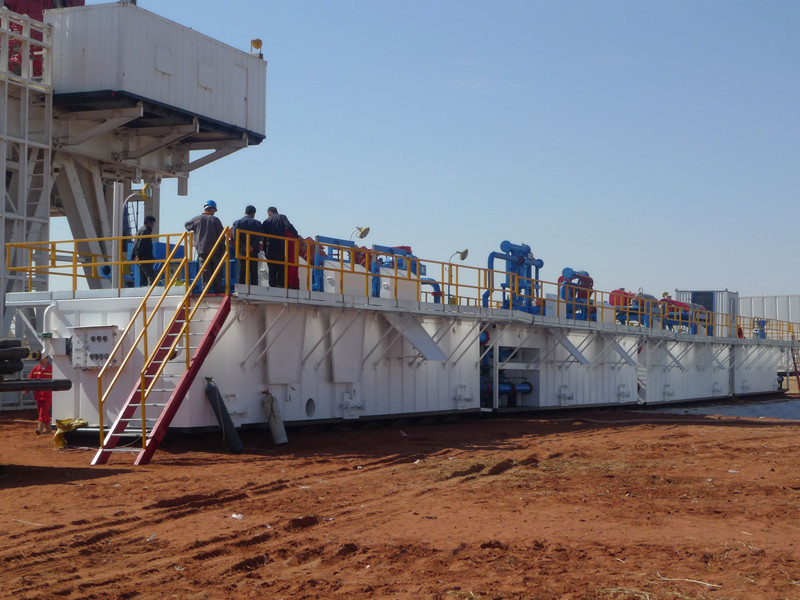
Oil and Gas drilling fluid solid contro equipment
Professional solve drilling fluid solid control problem and design new equipment to solve
View product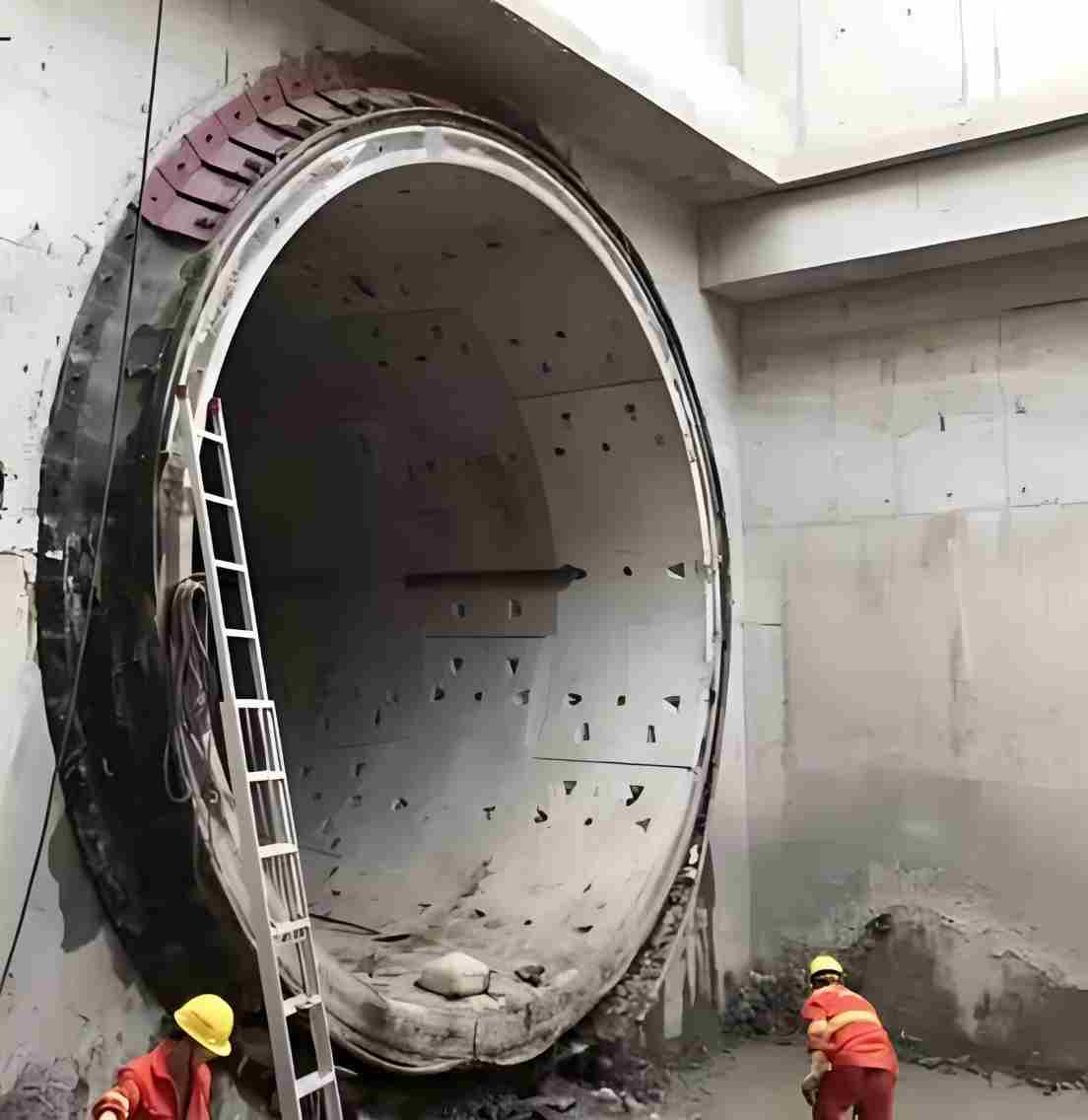
AngXin - Application of TBM Products for Efficient Tunneling
AngXin’s tunnel boring machines (TBM) and rubber seals optimize tunneling projects. Our hydrocyclones and tunneling equipment ensure efficient solids control and waste management.
View product
Angxin Pinnacle Series: API 13C Screens for Dual Pool Systems
Upgrade Dual Pool shakers with Angxin Pinnacle Series. Our API 13C compliant mesh delivers high conductance, precise cut points, and 30% longer service life.
View productFrequently Asked Questions
what is an entrance / exit rubber seal used for?
it is used on tunnelling projects with a tunnelling machine and is fixed on the jecting wall so that slurry and water cannot flow back into the entrance pit. the same ring form serves the launch wall and the receiving wall.
how do i specify the inner id, outer od and pcd?
inner diameter and outer diameter are made as tunnel requirement, while the pcd is customized to the bolt circle on your fixing face. send the tunnel diameter, the machine model and the measured bolt circle, and the ring is cut to those figures rather than to a stock size.
how are the fixing holes arranged?
the pitch is fixed: each 5 degrees carries one hole, so the ring bolts onto the tunneling machine face at that spacing. give the machine model and the fixing face, and the hole pattern follows from the 5 degree rule.
which thickness should i order?
three builds are offered: 10 mm, 20 mm and 30 mm. thicker rings carry more rubber and seat more firmly, while a thinner ring closes on a tight face gap more easily — the product page notes that at 10 mm there is no water drop at the edge of the circle. choose against your measured gap.
what is the seal made of?
a nature rubber body with an inner support of nylon wire interwired with horizontal cotton wire. that reinforcement is what holds the ring against stretching out of its bolt circle once it is bolted to the wall.
what is the minimum order, production rate and packaging?
minimum order is 1 piece and production runs at roughly 2 pcs per day. each piece is a roll, wrapped in plastic film first and then packed in a plywood case suited to ocean delivery. confirm the schedule against your delivery window when you send dimensions.